
Blogs
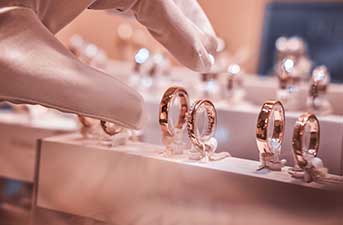
Want to know how much gold is in each karat?
While it’s easy to figure out how much pure gold is in whatever karat of gold you have, not many people know how.
Let’s say you have some 10-karat gold and want to know how much pure or 24-karat is in it. Simply put the number 10 in a calculator and divide by 24. The answer is the percentage of pure gold. So, 10 divided by 24 is .4166. Rounded up, you can say that 10-karat gold is 41.7% gold. The rest is different metals like copper, brass, or tin.
Following this formula, 14k gold divided by 24 is .5833. The actual gold content of 14k is 58.3%.
18k is 75%. 18 divided by 24 is .75.
Now that you know how to do it, figure out how much gold is in 21k, 22k, and 23k. See how smart you are!
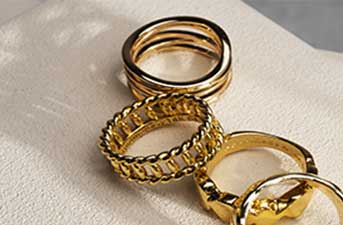
These days it seems everybody is out to get you. So, maybe a little knowledge will save you money and aggravation. Here’s a good tip – DON’T buy jewelry off the street. Even I have been duped. I was approached at a truck stop while getting gas. The man showed a gold chain and spoke of how he was in dire straits and needed cash. He was even willing to let his gold chain go for $20. Of course, he started at a higher price, but having the excellent skill of haggling, I got him down to $20. I didn’t have a gold test with me so I looked very closely at the chain. It looked real and the thought of what it could actually be worth was dancing in my head (GREED!). I eagerly gave the man $20. Once I was able to get home and test the chain, I found it to be fake. If it seems too good to be true, it usually is.
Another con game is the switcheroo. You are shown a specific piece of jewelry. They are asking a decent price. You test the gold or diamond and find it to be real. When you make an offer they will pull the switch by saying, ”Let me check with my husband, sister, mother, etc.” and they leave your sight and go back to their car where they have an exact fake replica ready to go. When they come back, they’ll say it’s OK to sell and you purchase the fake. You never see them again.
Always, always be very careful. Don’t get greedy and be aware of your surroundings.
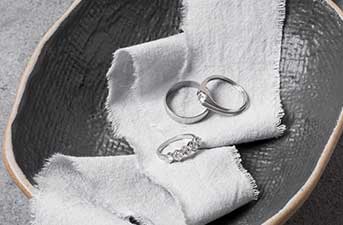
So, you are thinking about selling some gold you have, and as you are looking to see what karat you have you notice something other than the usual 10K, 14K or 18K. You’re seeing numbers like 417, 585 or 750. So what are these numbers and what do they mean?
If you have read my first blog on gold percentages then you know how to figure out what percentage of pure gold you have. Those percentage numbers were adopted by the gold industry and sometimes they are used instead of karat numbers, like 10K. We now know that the percentage of gold in 10K is 41.7%. So, instead of seeing the marking 10K, you may just see the number 417. This means it’s 10K or 41.7% gold. They are the same. As for 14K, the other number you may see is 585 which stands for 58.5% gold. 18K gold could be stamped 750 for 75% gold. 21k gold may read 875. 22K may read 916. 23K may read 958. What about 24K? .999 which is 99.9% pure. Just last week I saw a ring that was stamped 96. I had never seen this but after a few tests, it proved to be 96%.
Now just to confuse things, silver has its own set of numbers. Common silver jewelry is normally called 925 because it’s 92.5% silver. You could even see sterling flatware with the number 800. That would mean it is 80% silver.
Pay close attention to the numbers as you are looking at gold or silver because someone may be telling you one thing but the numbers are saying something totally different.
Next blog I will explain a little about what some of those letters behind the numbers mean.

Gold, the coveted and revered metal, has enchanted human beings for millennia. From adorning pharaohs and monarchs to becoming an integral part of modern economies, gold has maintained its allure. However, there comes a time in its life cycle when even gold loses its luster and transforms into something less glamorous – scrap gold. In this blog post, we delve into the fascinating world of scrap gold, exploring how and when it becomes scrap and the journey it takes thereafter.
The Life Cycle of Gold:
Gold, like all materials, goes through a life cycle. It starts as a precious metal deep within the Earth’s crust, extracted through mining. Once unearthed, it undergoes several processes, including refining, to turn it into pure gold. This pure gold is then shaped into various forms, such as jewelry, coins, bars, and industrial components.
When Does Gold Become Scrap?
Wear and Tear: One common way gold becomes scrap is through wear and tear. Over time, jewelry and other gold items may lose their shine, get scratched, or break. This gradual degradation often prompts owners to consider selling or recycling their damaged pieces.
Outdated Designs: Fashion trends evolve, and what was once a coveted gold piece may become outdated. Jewelry styles change, and some people choose to transform or recycle their old gold items into new, more contemporary designs.
Unwanted Inheritance: Inheritances often include gold items that may not hold sentimental value to the recipient. In such cases, these items may end up being sold or recycled for their monetary worth.
Economic Necessity: In times of financial hardship, individuals may turn to their gold possessions as a source of liquidity. Selling or recycling gold can provide quick cash when needed.
The Journey of Scrap Gold:
Once gold becomes scrap, its journey takes an intriguing turn:
Collection: Gold scrap can come from various sources, including individuals, jewelry stores, manufacturers, and electronics recyclers. It can include broken jewelry, dental gold, old coins, electronic components, and more.
Assessment: After collection, scrap gold undergoes assessment to determine its purity and value. This is typically done using techniques like acid testing or X-ray fluorescence analysis.
Refining: The scrap gold is then sent for refining, where impurities are removed, and the gold is purified. This process can involve chemical treatments and high-temperature processes to extract pure gold.
Recreation: Once purified, the gold is ready to be molded into new forms. It can be used to create new jewelry, coins, or other items, effectively giving it a second life.
Resale: Scrap gold can also be sold to refiners, who will then sell it to manufacturers or investors. This recycled gold contributes to the global gold supply chain, reducing the need for fresh mining.
Gold may lose its shine and allure over time, but its journey doesn’t end there. When gold becomes scrap, it embarks on a new adventure, undergoing transformation, and reintegration into the economy. This cycle of recycling not only preserves the precious metal but also reduces the environmental impact of mining. So, the next time you come across a piece of scrap gold, remember that even in its diminished form, it plays a crucial role in the ongoing story of this timeless and valuable metal.
Contact Us
